E numbers check: What's really behind the codes in your snacks
E numbers?! When you look at packaging labels, you often see more hieroglyphics than ingredients you recognise. Do codes like E 440 or E 322 on the label remind you more of a chemistry lab than a tasty snack? You're not alone! But don't panic, we've got you covered. We're here to demystify the mystery of E numbers. Additives (sometimes) make sense! They're often not as bad as their reputation, because many of these substances are natural and essential for food safety.
E as in… Europe – What are E numbers?
That's right, the ‘E’ stands for our continent. Simply put, E numbers are additives that are approved for use in food in the European Union (EU). So finding one of over 300 E numbers on the list of ingredients is not necessarily a warning sign. On the contrary: it is actually proof that the substance has been rigorously tested and found to be safe by the EFSA (European Food Safety Authority).
They are used, for example, to make certain foods more appetising or longer-lasting, or to make them easier to process.
The most common food additives include:
- Colorings: to make a product look better.
- Preservatives: so that products don't spoil after 2 days.
- Antioxidants: Prevent fats from going rancid.
- Emulsifiers: Ensure that fat and water do not separate.
- Flavour enhancers: Bring out the aroma.
- Thickeners: Give the right consistency.
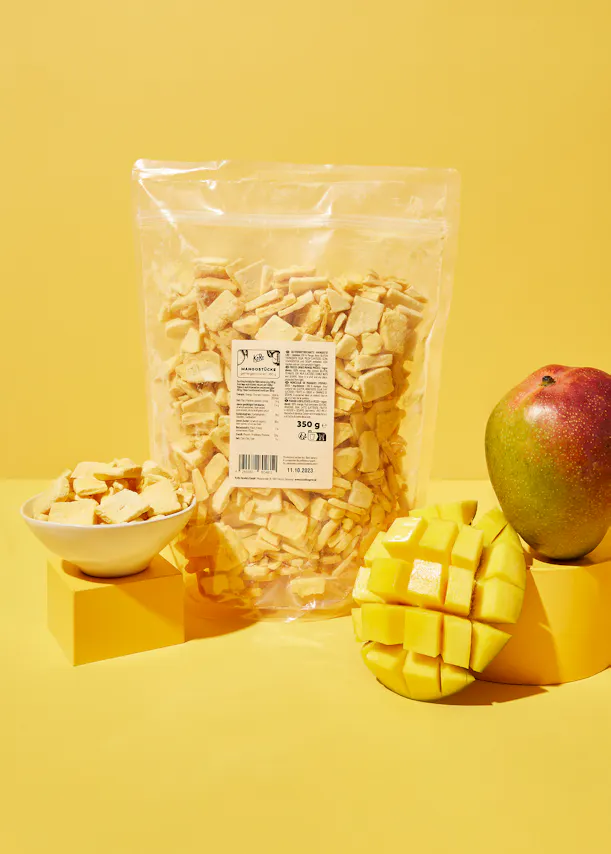
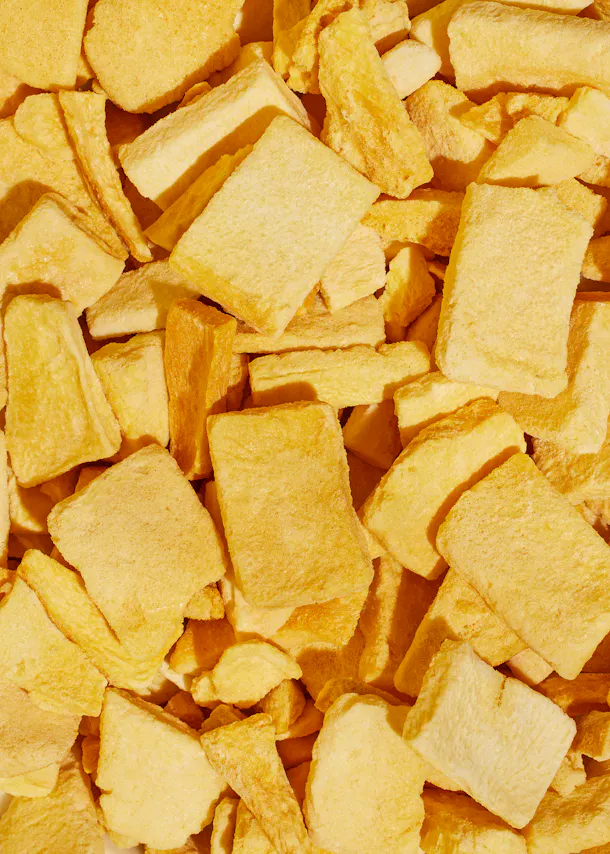
But: Our dried fruits prove that products can have all of these good qualities without any additives at all: our freeze-dried strawberries and freeze-dried mango chunks consist of only 1 ingredient, the actual fruit! No additives, no preservatives and still delicious.
Plant power and more: What are natural aditives?
Often, a cryptic number hides something completely harmless. Natural additives, for example, are substances that are obtained directly from nature, so they are old acquaintances, so to speak. Classic examples of E numbers are E 300 – nothing other than vitamin C (ascorbic acid) – and E 440 (pectin), which comes directly from apples or citrus fruits.
Safety & quality: Why are E numbers sometimes essential?
In our clean label article, we explain that ‘free from’ does not always mean ‘better’. Sometimes additives are the silent heroes of quality. They ensure that your favourite snacks arrive just as you love them – with the ideal consistency and full flavour.
Here are four examples of why additives are used at KoRo:
- For the optimal mouthfeel: We use lecithin (E 322) as an emulsifier in our protein bars and nut butter cups to bind fats and dry ingredients together perfectly. This prevents a crumbly texture or a greasy film on the surface and ensures the necessary creaminess.
- Plant-based structure over gelatine: We use pectin to ensure that our fruit bites, clusters and jams are nice and firm while remaining vegan. As a thickening agent derived from fruit, it is the ideal plant-based alternative to gelatine and ensures the right gel-like texture. Want to find out more? Read our article on plant-based gelling agents!
- Natural protective shield and balance: Antioxidants such as ascorbic acid (vitamin C) protect the colour and aroma from oxygen. Citric acid rounds off the whole thing by balancing the sweetness and keeping the taste stable throughout the storage period.
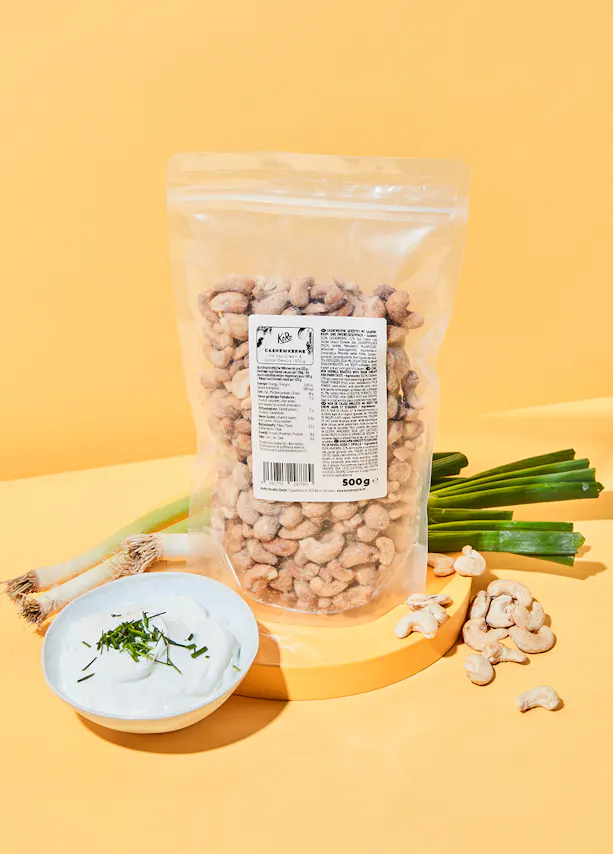
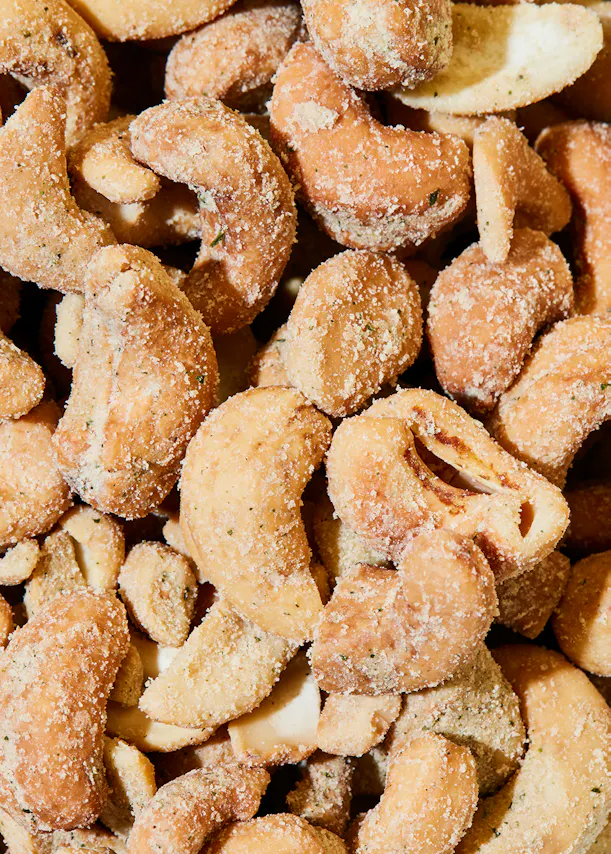
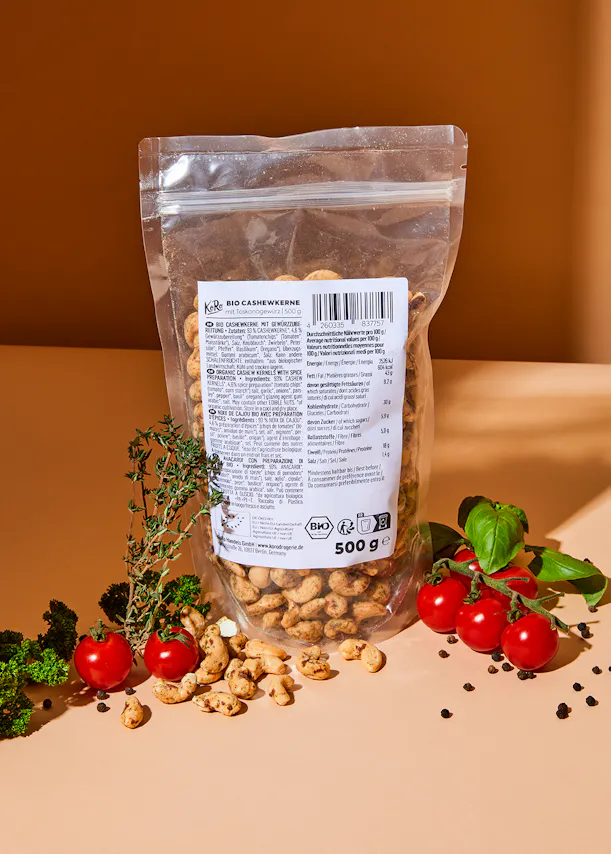
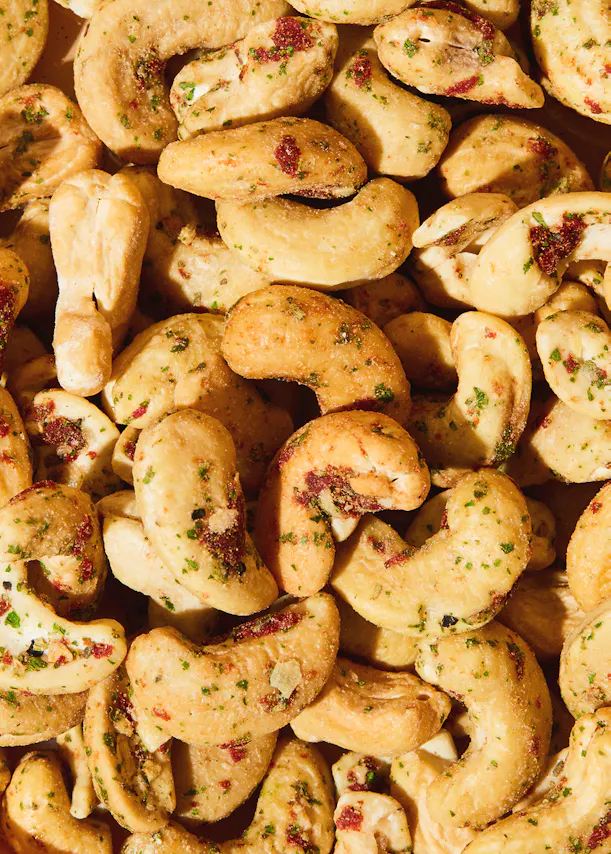
- Spices that stick: Have you ever wondered why the spices stick so wonderfully to the nuts in our curry cashews or chilli nut mix? Gum arabic, a natural ‘glue’ from acacia trees, helps here. It ensures an even flavour on every single nut without the whole thing sticking or clumping together.
Words over code: Why we prefer names over E numbers at KoRo
Now that you know why we sometimes need these functional little helpers, you may be wondering: ‘Why can't I find any “E” numbers on my KoRo packaging?’ The answer is as simple as it is transparent: We prefer to use plain language instead of code.
By law, manufacturers are allowed to use either the E number or the specific name. At KoRo, we love transparency, which is why we have opted for the ‘plain language principle’. We almost always choose the name in the list of ingredients. Why? Because we think that ‘sunflower lecithin’ simply reads better and is easier to understand than E 322. We don't want you to have to pore over a list of food additives to understand what you are eating.
E numbers table: The E numbers behind every name
Our E number table shows you what is behind each code.
Code | Name | Funktion |
E 300 | Ascorbic acid | Antioxidant (protects aroma & colour) |
E 322 | Lecithin | Emulsifier (for creaminess) |
E 330 | Citric acid | Acidifier (for balance) |
E 414 | Gum arabic | Stabiliser (for spices to adhere) |
E 440 | Pectin | Thickening agent (for vegan structure) |
A look at the sheld: Which E numbers should be avoided?
Our motto here is: as much as necessary, as little as possible. While most additives are harmless in moderate amounts, at KoRo we believe in making conscious choices.
Although many E numbers are officially considered safe, some simply do not fit in with our philosophy of natural, high-quality food. Here is our list of things we avoid in all new product developments:
- Artificial colouring: Substances such as E 102 (tartrazine) or E 133 (brilliant blue) do not make it onto our shelves. They do not improve the taste or quality and are simply unnecessary, as real food already provides natural colour.
- Non-vegan E numbers: A big issue for our community is the question: Which E numbers are not vegan? We therefore avoid substances such as E 120 (real carmine from scale insects) and anti-caking agents such as E 901 (beeswax) or E 904 (shellac) to ensure that our plant-based snacks remain truly plant-based.
More clarity through the jungle of ingredients
We hope you have now realised that E numbers are no cause for panic, but rather part of modern food safety. However, it is always worth reading the list of ingredients critically. At KoRo, we make it easy for you: we focus on quality, transparency and names that you can understand without a degree in chemistry. Fancy pure enjoyment without any frills? Then take a look at our natural nuts oder and our pure nut butters!